
Is Arabic Hard to Learn for English Speakers? You NEED this

Yes, Arabic can be hard to learn for English speakers. The Foreign Service Institute ranks it as a Category IV language. You’ll face challenges with a new alphabet, unfamiliar sounds, right-to-left reading and new grammar. However, with the right approach and consistent practice, it’s absolutely achievable.
I’m not going to sugarcoat this or pretend it’s a walk in the park. Arabic sits at the top of the difficulty ladder for native English speakers and there’s solid data to back that up.
The US Foreign Service Institute studied how long it takes diplomats to learn different languages. They placed Arabic in Category IV, the highest difficulty category. We’re talking 88 weeks of intensive study, roughly 2,200 hours, to hit professional working proficiency.
For comparison? Spanish takes about 600 hours. French needs around 750. Arabic demands nearly three times that commitment.
Why is it so challenging?
You’re essentially starting from scratch. The Arabic script looks nothing like the Latin alphabet you grew up with. You’ll read from right to left instead of left to right. The sounds include throat and guttural consonants that don’t exist in English.
But here’s what I’ve learnt after years of teaching: difficulty doesn’t mean impossible. It just means you need a clear roadmap, realistic expectations and the right strategy.
The good news? Thousands of English speakers learn Arabic every year. Students, professionals, travellers and language enthusiasts all crack the code. You can too, as long as you know what you’re walking into.
Why Is Arabic Considered Difficult for English Speakers?

Arabic feels foreign because it shares almost no linguistic DNA with English. Unlike Spanish or German, which belong to the same Indo-European language family, Arabic comes from the Semitic family. This means the two languages evolved completely separately, with different rules for everything.
Think of it like this: learning Spanish is like switching from Windows to Mac. Learning Arabic is like switching from Windows to a system that hasn’t been invented yet. Nearly everything works differently.
Learn the alphabet first
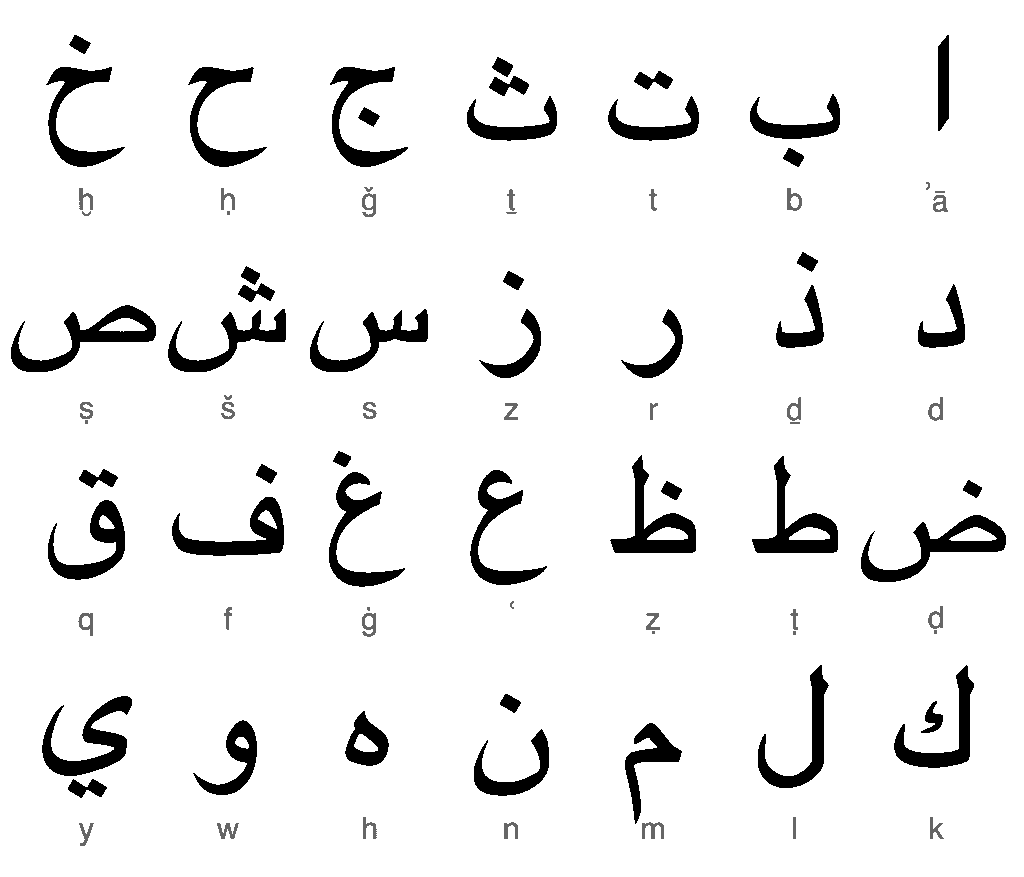
You can’t read a single word of Arabic without learning an entirely new alphabet. The Arabic script has 28 letters and each letter changes shape depending on where it sits in a word (beginning, middle or end). That’s like having four versions of the letter “B” to memorise.
But here’s your quick win:
Most students can read and write the Arabic alphabet within two to three weeks of focused practice. I’m talking 15-20 minutes daily. The script looks intimidating in bulk, but broken down letter by letter, it’s surprisingly simple. You’ll feel a massive confidence boost once you can actually read words, even if you don’t understand them yet. That moment usually happens faster than you expect.
The Sounds Don’t Exist in Your Mouth
Arabic has sounds that English simply doesn’t use. I’m talking about guttural consonants that come from deep in your throat. Letters like ع (ayn) and ح (ha) require muscle movements you’ve never made whilst speaking.
Your advantage:
Your ears adapt faster than your mouth does. Start by just listening. Arabic podcasts, YouTube videos, even as background noise. Within a month of regular exposure, you’ll start hearing distinctions you couldn’t catch at first. I’ve watched complete beginners go from “it all sounds the same” to picking out individual sounds in just weeks. Once your ear tunes in, your mouth follows.
Record yourself practising and compare it to native speakers. You’ll hear your own progress, which keeps motivation high.
The Grammar Flips Everything Upside Down
Arabic grammar operates on fundamentally different principles. English builds sentences in Subject-Verb-Object order: “I eat apples”. Arabic typically uses Verb-Subject-Object: “Eat I apples” (roughly translated).
Here’s the shortcut:
You don’t need perfect grammar to communicate effectively. Focus on present tense first, it’s simpler and covers 80% of daily conversations.
Learn basic sentence structures before diving into cases and duals. Native speakers are incredibly forgiving of grammar mistakes as long as you’re trying. . Perfect grammar comes later; functional communication comes first. Start messy, refine as you go.
Dialects vs MSA: One Language or Many?
Arabic functions as both one language and many. Modern Standard Arabic (MSA) is the formal, written standard understood across all Arab countries. However, spoken dialects vary so dramatically between regions that Arabs themselves often struggle to understand each other.
Here’s your strategic solution: Start with MSA for three to six months to build your foundation. Simultaneously, expose yourself to your chosen dialect through media, just listening, not actively studying yet. After six months, shift focus to dialect whilst maintaining MSA reading practice. This stacked approach means you’re not choosing wrong, you’re building systematically. Within a year, you’ll read MSA comfortably and converse in your chosen dialect naturally.
Different Goals = Different Difficulty Levels
Your goal completely reshapes what’s hard about Arabic. A conversational learner faces different challenges than someone studying classical texts.
Conversational learners need dialect mastery and listening skills. Grammar perfection matters less. You’ll struggle with fast-paced street talk and slang, but you can skip complex written forms. Timeline: 6-12 months to basic conversations.
Academic learners need MSA fluency and formal grammar. You’ll wrestle with classical sentence structures and academic vocabulary, but you can ignore casual dialect. Reading dense texts is your main hurdle.
Religious/Quranic learners face Classical Arabic, which is more complex than MSA. You’ll need to understand archaic grammar and poetic structures. The upside? Quranic Arabic is highly standardised with excellent learning resources.
Business learners need formal MSA plus regional dialect. You’re learning two varieties simultaneously, which doubles initial effort. However, business vocabulary is limited and predictable.
Your advantage:
Knowing your goal lets you cut unnecessary work. A conversational learner doesn’t need to master Classical grammar. A religious learner doesn’t need Egyptian slang. Focus narrows difficulty dramatically.
Who Finds Arabic Easier or Harder?
Your background dramatically affects your Arabic journey. Here’s who has built-in advantages and disadvantages.
Heritage learners (grew up hearing Arabic at home) understand spoken dialect naturally but often can’t read or write. You’ll speak confidently before you can text a simple message. Literacy becomes your main challenge, not listening comprehension.
Semitic-language speakers grasp the root system intuitively. You’ll recognise how ك-ت-ب generates related words because your native language works similarly. Grammar patterns feel familiar, not alien.
Children under 12 absorb pronunciation and listening skills better. Their brains are still wired for language acquisition. Adults excel at grammar rules and memorisation but struggle with accent reduction.
Speakers of non-Western languages (Urdu, Farsi, Turkish) already read right-to-left or use similar sounds. You won’t waste weeks adjusting to basic script direction or throat consonants.
Why this matters:
Stop comparing yourself to everyone else’s timeline. Your starting point is unique and so is your path.
This is the Easiest Path to Learn Arabic for English Speakers
Structured learning:
Start with MCL Arabic’s Gateway to Arabic Level 1 course (https://www.mclportal.com/courses/gateway-to-arabic-level-1).
There’s a 7-day free trial, perfect for testing if their teaching style fits you. The course builds systematic foundations for English speakers specifically.
Set up one immersion habit today. One Arabic podcast subscription. One Instagram account. One phone setting changed. Small daily exposure compounds faster than intense weekly sessions